9. Memory task
For the purpose of not disclosing to participants that language attitudes are being measured, a task implementing a simple memory card game is provided to act as a distractor after the completion of linguistic tasks such as the LSBQe and AToL.
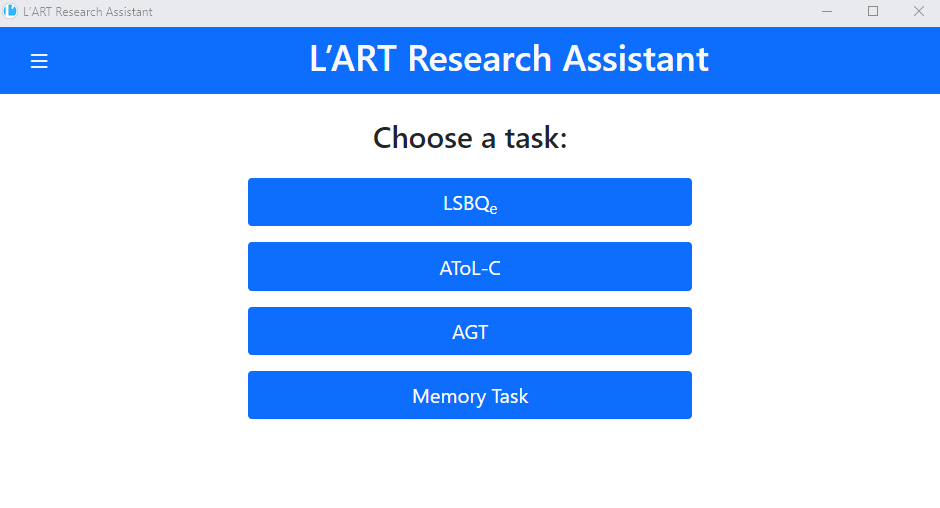
Fig. 9.1 Research Client homescreen
The memory game consists of 20 picture cards in which participants are tasked to match each card with its respective pair in the shortest amount of time possible. Once a card has been clicked, only then the timer will begin. As seen in Fig. 9.2, all cards are faced down and only two cards are able to be revealed at a time, therefore the participant must try to memorise the card locations.
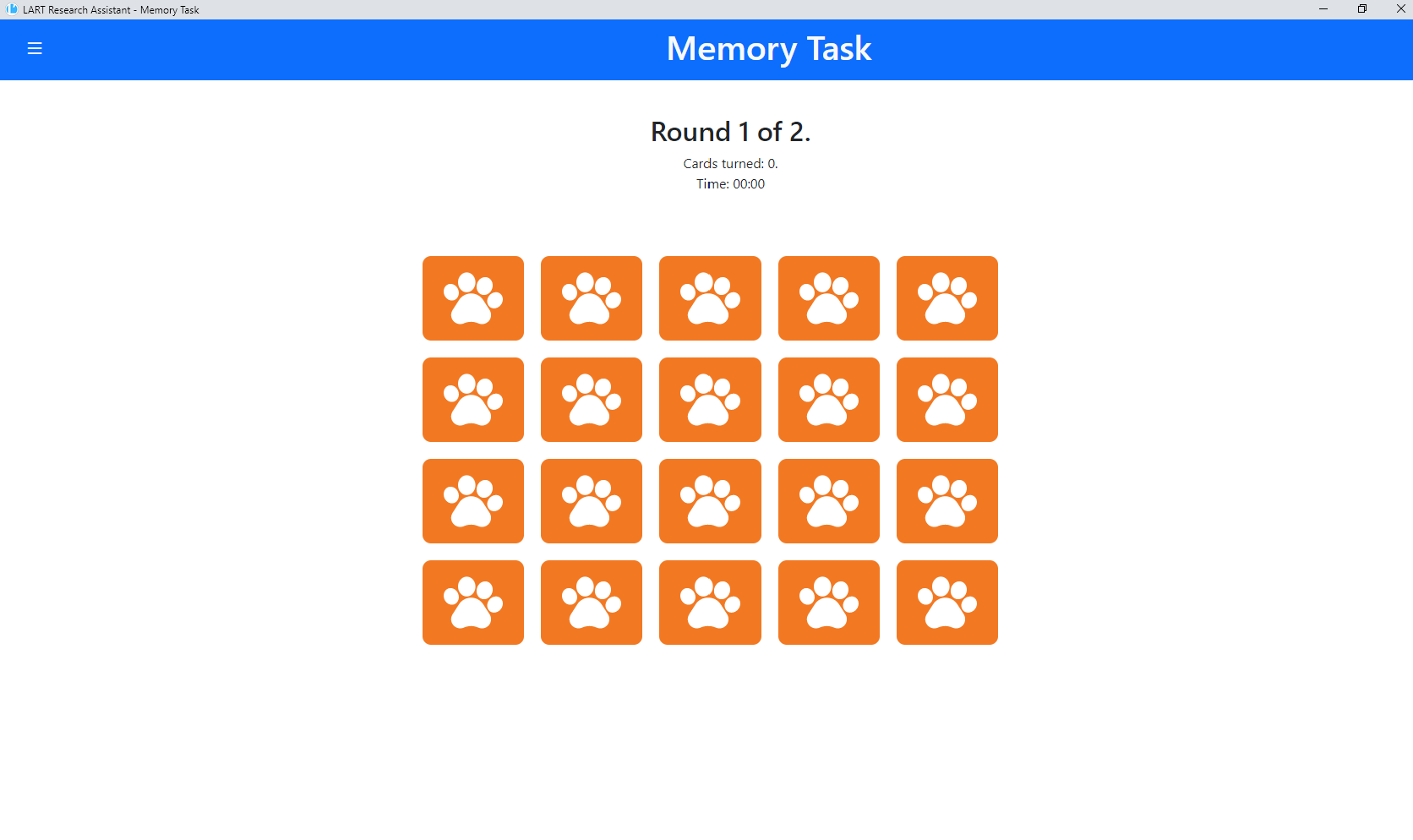
Fig. 9.2 Starting screen of memory task
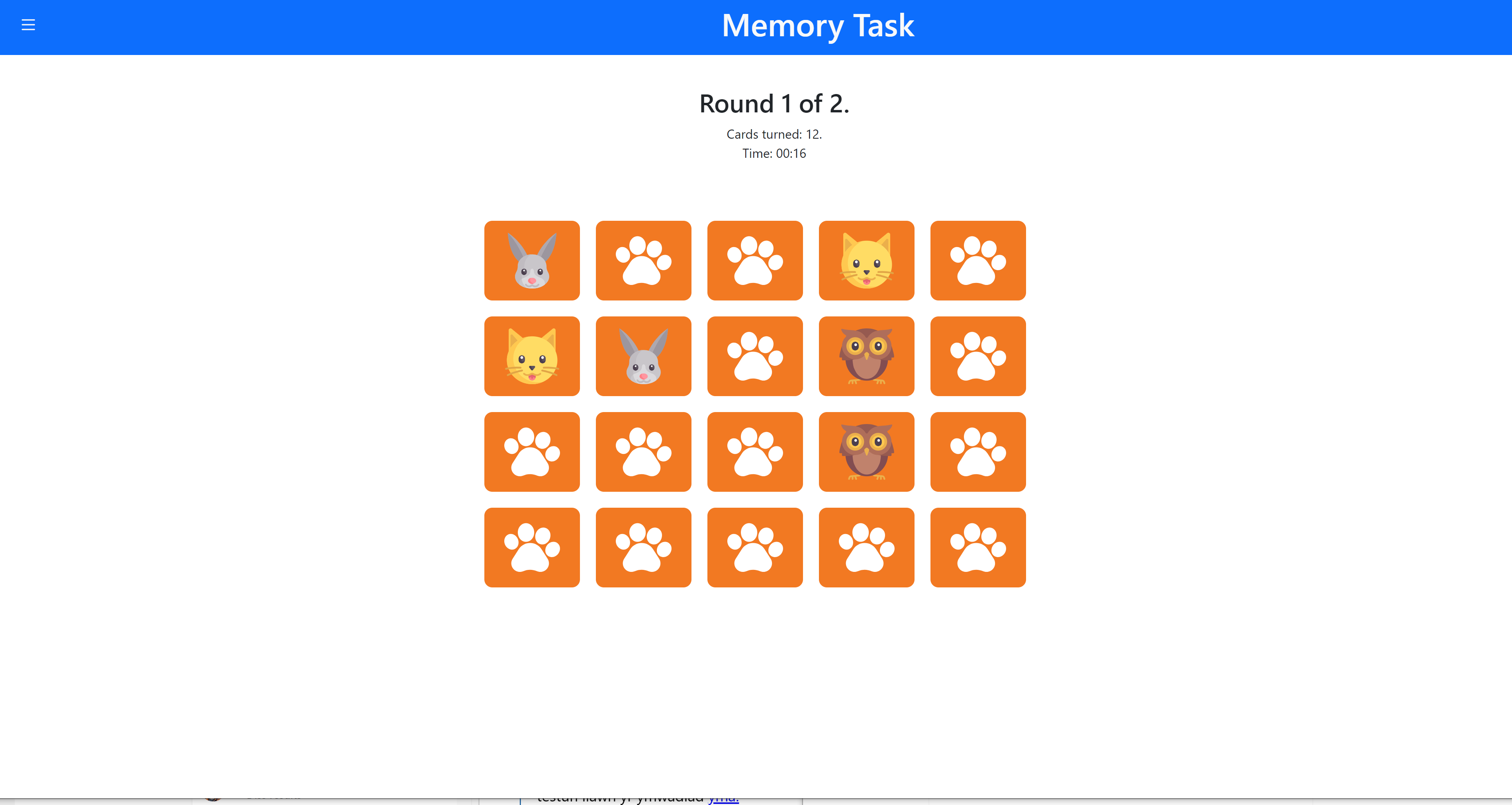
Fig. 9.3 Matching identical card pairs in the memory task
There are a total of two rounds in which the participant is given the opportunity to achieve a higher score.
After completing the memory task, a congratulatory results screen will appear.
Results are displayed after each round as seen in memory_task_first_results and
data for the memory task will not be saved.
As this is purely a distractor task, participants will still be informed that their ‘data has been saved automatically’ as seen in Fig. 9.4 before continuing on to the next task.
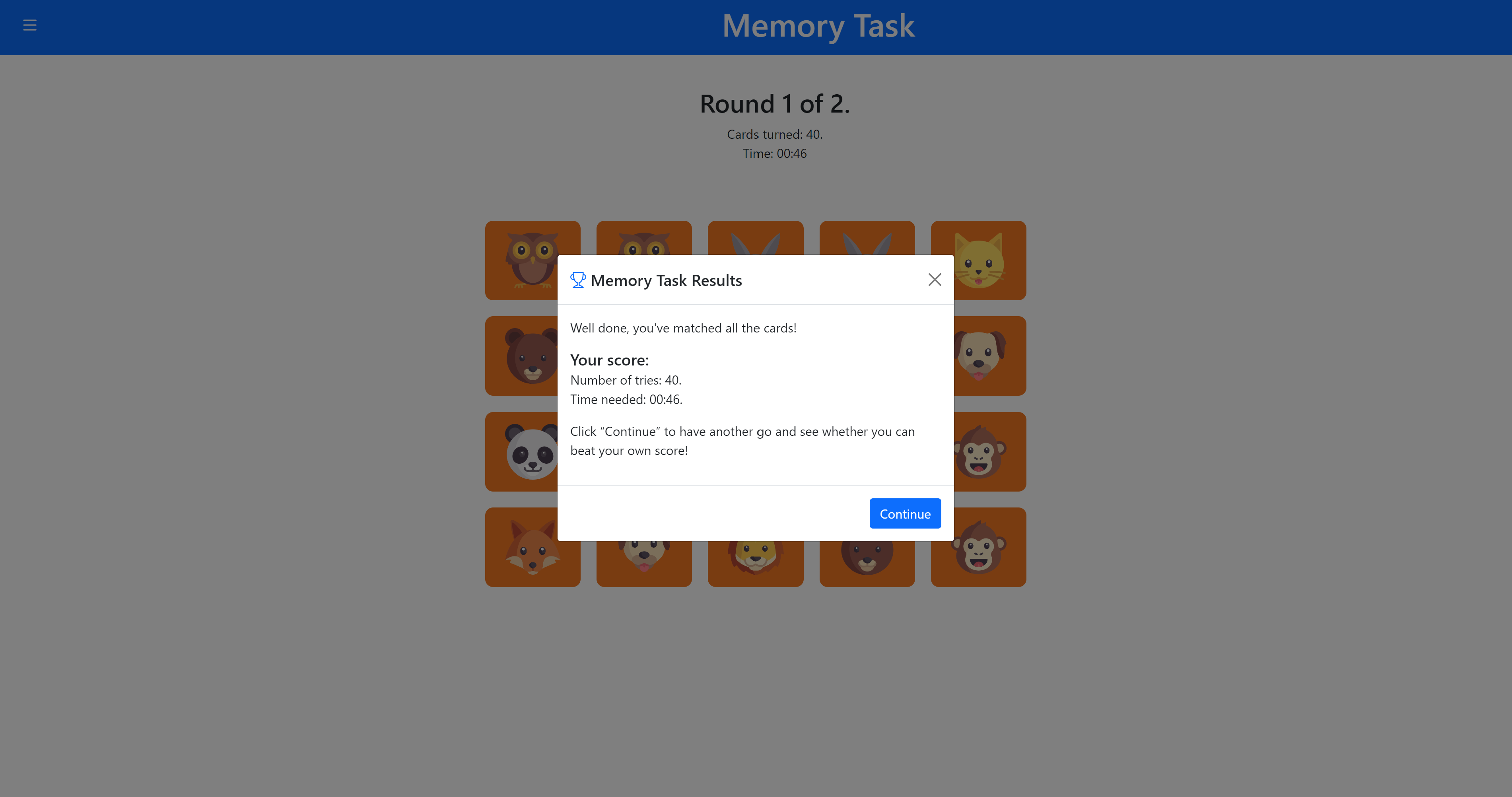
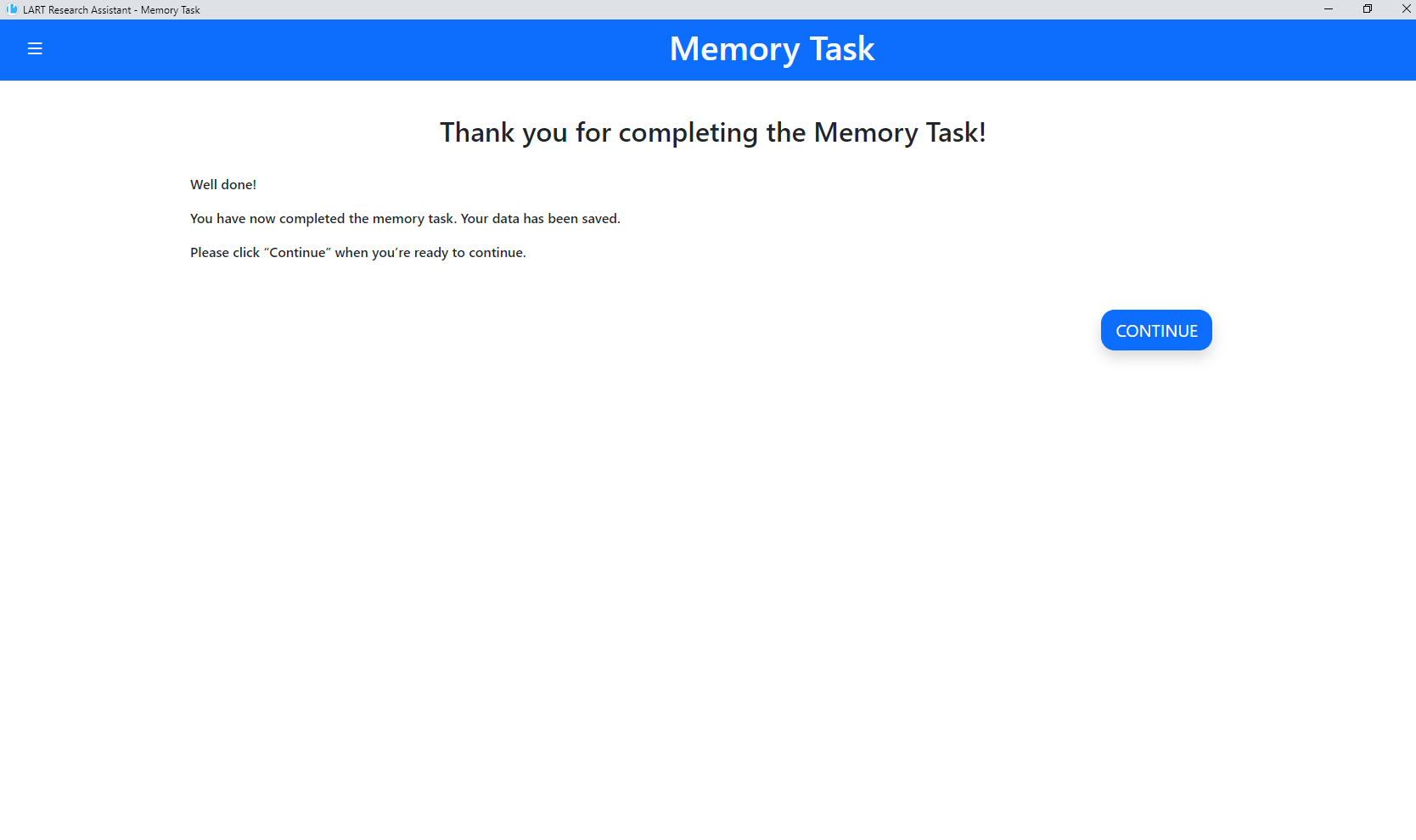
Fig. 9.4 Memory task conclusion screen